Tracing Your Roots: The Complex History of Curaçao
Curaçao, the largest of the ABC islands, is famous for its neon-colored architecture and crystal-clear coves. However, for the family historian, beneath its tropical exterior lies a deep, complex history of migration, colonial shifts, and a resilient struggle for freedom.
To understand your Curaçaoan lineage, one must journey through the eras of indigenous survival and colonial transition that shaped the records we use today.
The Indigenous Foundation: Finding the Caquetío
Long before European ships arrived, Curaçao was home to the Caino Arawaks, specifically the Caquetío. Arriving from the South American mainland around 500 AD, they established a sophisticated society focused on agriculture and fishing [1].
While colonial records often overlook their presence, the Caquetío legacy is etched into the island’s landscape. Their ancient rock art can still be found in the Hato Caves and Christoffel Park, and their influence remains a cornerstone of the island’s cultural identity and early genetic heritage.
European Arrival and the “Isla Inútil” Era
The island’s history was reshaped by European expansionism, characterized by frequent changes in “ownership” that often fractured family units:
- 1499 – European Arrival: Alonso de Ojeda reached the island. While the Spanish claimed the territory, they labeled it an isla inútil (useless island) because it lacked gold [2].
- 1513–1515 – Forced Depopulation: In a tragic chapter for genealogists and historians alike, the Spanish forcibly removed almost the entire indigenous population to Hispaniola to work in mines, effectively stripping the island of its original inhabitants [3].
- 1526 – The Return under Juan de Ampiés: The story of the Caquetío did not end in the mines. Juan Martínez de Ampiés was granted the right to develop the islands and successfully orchestrated the return of many surviving Caquetío from Hispaniola back to Curaçao [4]. They transitioned into cattle ranching, forming the basis of the island’s earliest colonial population.
Records of the Enslaved: The Dutch West India Company Era
In 1634, the Dutch West India Company (WIC) seized Curaçao from Spain. Under Dutch administration, the island became a primary “depot” for the Transatlantic Slave Trade. Thousands of enslaved Africans were brought to the island to be sold to other colonies or forced to work on local salt pans and plantations [5].
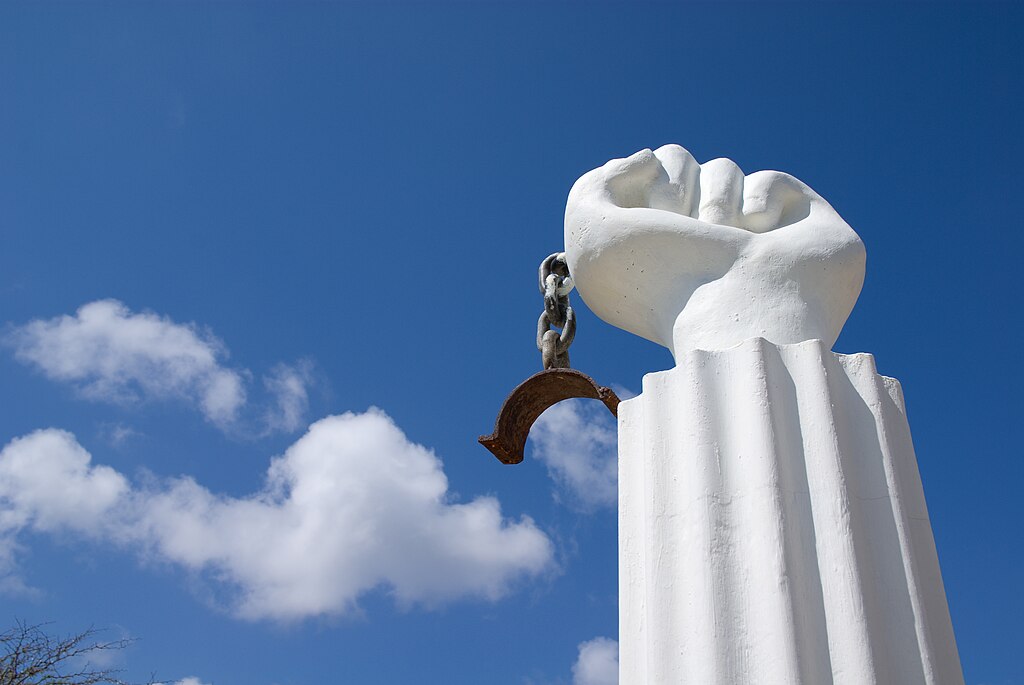
This era of oppression led to the Slave Revolt of 1795, led by Tula. Although the revolt was suppressed, it remains a pivotal moment of resistance. For researchers, this era is documented through ship manifests and plantation ledgers, though individual names were often replaced by descriptions or numbers.
Researcher’s Tip: Surnames in Curaçao
When researching, remember that many families in Curaçao did not have official surnames until the abolition of slavery on July 1, 1863. If you are searching for ancestors prior to this date, look for ‘Manumission’ records. These documents often list the name given to an individual upon their freedom and serve as a vital bridge between the Slave Registers and the Civil Registry.
Researching Ancestry: Using the WieWasWie Database
Because of the long-standing administrative ties between Curaçao and the Netherlands, many vital historical records are preserved in Dutch archives. For those seeking to reconnect with their past, the website WieWasWie (meaning “Who was Who”) is a premier genealogical resource.
How to use WieWasWie for Caribbean Research:
- Slave Registers (Slavenregisters): These are perhaps the most vital records for tracing ancestors back to the era of slavery. They often include names, birth years, and manumission (freedom) dates.
- Civil Registry Records: Following 1863, birth, marriage, and death certificates became the standard. These offer a wealth of information including parents’ names and occupations.
- Population Registers: These detail where families lived and worked, helping you map your family’s physical history on the island.
The site is available in English and provides a user-friendly gateway into the National Archives of the Netherlands, making it an essential tool for any Curaçaoan ancestry project.
Notes and Historical Sources
- [1] Pre-Columbian Origins: Haviser, J. B. (1987). Amerindian Cultural Geography on Curaçao. Archaeological-Anthropological Institute of the Netherlands Antilles.
- [2] The “Useless Islands” Decree: Hartog, J. (1968). Curaçao: From Colonial Dependence to Autonomy. De Wit.
- [3] Deportation to Hispaniola: Anderson-Córdova, K. F. (2017). Surviving Spanish Conquest: Indian Resistance and Survival in the Greater Antilles. University of Arizona Press.
- [4] The Ampiés Restoration: Goslinga, C. Ch. (1971). The Dutch in the Caribbean and on the Wild Coast, 1580-1680. University of Florida Press. (Detailing the 1526 return of indigenous people).
- [5] The Dutch Slave Trade: Postma, J. M. (1990). The Dutch in the Atlantic Slave Trade, 1600-1815. Cambridge University Press.
- [6] Genealogical Access: National Archives of the Netherlands (Nationaal Archief). Digitized records via the WieWasWie database.