What is Wrong with Your DNA?
Nothing.
But that’s not how it feels when your DNA results surprise you and you find unexpected DNA results.
Every year, thousands of people take a DNA test expecting confirmation of what they have always believed about their ancestry. Instead, they receive ethnicity results or cousin matches that challenge family stories, cultural identity, or long-held assumptions.
When that happens, the first reaction is often: “Something must be wrong with the test.”
Let’s talk about why that reaction happens — and why your DNA is not the problem.
Understanding Unexpected DNA Results
Autosomal DNA tests, such as those offered by AncestryDNA, 23andMe, FamilyTreeDNA, and MyHeritage, analyze inherited DNA from both parents.
These tests:
- Reflect ancestry from approximately the last 500–700 years
- Identify genetic cousins based on shared centimorgans (cMs)
- Estimate ethnicity using reference populations
They do not measure medieval identity, they do not rewrite history, they reveal inherited segments passed down through generations.
Why DNA Results Sometimes Feel “Wrong”
There are several common reasons people question their results:
1️⃣ Unexpected African Ancestry
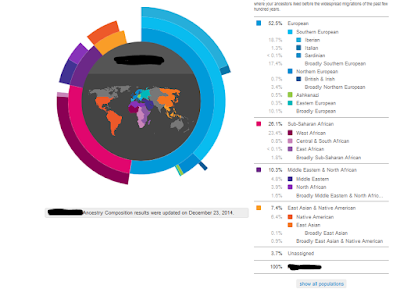
In Caribbean and Latin American populations, African ancestry is common due to the transatlantic slave trade. However, historical narratives and colorism have often minimized or erased that history in family storytelling.
When a DNA test shows significant African ancestry, it may challenge identity narratives that were shaped socially rather than genetically.
2️⃣ Ethnicity Updates
DNA companies refine their reference panels over time. As databases grow, ethnicity percentages may shift. That does not mean your DNA changed — it means the science improved.
3️⃣ Surprising DNA Matches
Autosomal DNA may reveal relatives you did not know existed. Sometimes this uncovers:
- Misattributed parentage
- Unknown siblings
- Adoption
- Family secrets
These discoveries can feel destabilizing, but they are not errors. They are inherited truth.
DNA vs. Identity
DNA does not follow social labels.
Physical appearance (phenotype) does not always reflect the full complexity of genetic inheritance. You may inherit ancestry that is not immediately visible in your features.
Especially in Caribbean populations, ancestry is layered:
- Indigenous
- European
- African
- Sometimes Middle Eastern or Asian
Genetic inheritance does not ask how you identify socially. It simply reflects what was passed down.
The Myth of “Ancient” Explanations
One common misunderstanding is attributing significant African ancestry to very ancient historical events, such as medieval migrations.
However, autosomal DNA primarily reflects recent centuries. If a person shows a large percentage of Sub-Saharan African ancestry, the most historically consistent explanation in the Caribbean and Latin America is the Atlantic slave trade period.
Understanding history helps make sense of genetic results.
Accepting the Full Story
Genealogy is not about preserving myths. It is about uncovering truth.
Sometimes that truth is uncomfortable. But acknowledging all branches of your ancestry — enslaved, enslaver, immigrant, colonist, laborer — creates a more complete and honest family history.
There is nothing wrong with your DNA.
There may simply be more to your story than you were told.
Final Thoughts
If your DNA results surprised you:
- Take time to learn how autosomal inheritance works.
- Research the history of your region.
- Build your family tree alongside your DNA matches.
- Approach discoveries with curiosity rather than denial.
DNA testing is a tool. Used correctly, it can expand understanding — not diminish identity.
And that is the real power of genetic genealogy.